觀點
Emil Avdaliani:Israel’s Power Play in the Horn of Africa


【明報文章】In late December 2025 Israel recognized Somaliland, up until late 2025 unanimously recognized as part of Somalia. Nevertheless the region was run since early 1990s as an independent entity with its own well operating institutions. Israel’s decision might be surprising to an ordinary reader, but it does represent a result of confluence of a number of economic and geopolitical calculations since 2023 when the war in Gaza began.
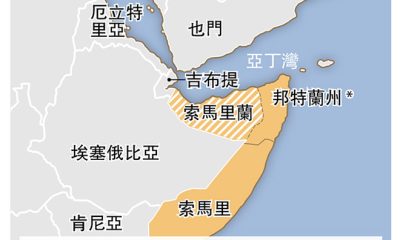
First comes geography. Strategically located at the tip of the eastern part of the African continent it is close to Yemen where the Houthis have been actively involved in a unified anti-Israeli front led by Iran from the beginning of the war in Gaza. A prominent member of the Axis of Resistance, Iran-backed group of non-stated militarized actors spread across the Middle East, the Houthis engaged in a maritime warfare against the ships heading to Israel and those belonging to the Jewish state. This in turn caused chaos in the maritime shipping industry and diverted part of the transcontinental trade from the Red Sea to a much longer route circumventing entire Africa.
For Israel, Somaliland therefore provides a valuable strategic geography to contain the Houthis. Geographic proximity will allow Israel to gather intelligence and threaten militarily Houthi-held territories. Moreover, Israel will also likely establish a military presence in Somaliland which will enable Tel-Aviv to become a key actor when it comes to ensuring safe passage for ships through the Bab-el-Mandeb Strait. Denial to and offense against the Houthis thus has been a key incentive for Israel. Indeed, the Houthis are by far the only remaining powerful member of the Axis relatively lightly touched by Israel’s military power. Others – Hamas, Hezbollah – have been systematically degraded, while the Assad dynasty lost power in Syria. Moreover, Iran too has been weakened through a series of Israeli aerial assaults to bomb the country’s nuclear capabilities.
Israel is thus elevating its geopolitical weight not only in the Horn of Africa itself, but more generally in the wider Middle East and perhaps even internationally. Tel-Avis is likely to work with the de-facto authorities in Somaliland on them joining the Abraham Accords – a series of agreements between Israel and the countries of the Islamic world. Other forms of cooperation could include commerce and Israeli investments into key areas of Somaliland, but most of all in the port of Berbera.
Another reason is Israel’s ambition to deny influence of other Middle East powers which are increasingly interested in projecting their power in eastern and central parts of the African continent. Turkey is one of them which has upped its engagement with Somalia through economic and military measures. It was no wonder that the leaders of Turkey and Somalia held a meeting to condemn Israel following the latter’s decision to move ahead with the recognition. Given the tensions between Tel-Aviv and Ankara because of the war in Gaza and Israel’s intermittent bombing of Syria since the fall of Bashar al-Assad, the case of Somaliland will add yet another layer of complexity between the two Middle Eastern competitors.
Among other actors expanding their influence in the region are Iran, the UAE and Saudi Arabia. Though Israel maintains close and cautious ties with Abu-Dhabi and Riyadh, Tehran’s engagement with the Horn of Africa has expanded over the past year or so. In May 2025 Tehran and Addis Ababa signed a security treaty it was therefore based deep historic ties between the nations. The document envisions closer collaboration on issues such as prevention of cross-border crime and training in military and security domains. Iran has also worked on engaging the maritime zone around the Horn of Africa by sending ships for anti-pirate missions in the Gulf of Aden as was the case in 2019.
Israel’s move to wedge itself into the Horn of Africa and recognize Somaliland could open the way for other countries to imitate. Ethiopia might be one of them which seeks sea access for its booming export capacity. Though Djibouti was often seen as one of the potential countries for Ethiopia’s connectivity goals toward the Red Sea, Somaliland is likely to emerge as a real possibility for Addis Ababa in the near future. Israel’s move also means that the Horn of Africa has grown closer to the Middle East creating one inseparable geopolitical arena.
Emil Avdaliani is a professor of international relations at the European University in Tbilisi, Georgia, and a scholar of Silk Roads. He can be reached on Twitter/X at @emilavdaliani.
(本網發表的時事文章若提出批評,旨在指出相關制度、政策或措施存在錯誤或缺點,目的是促使矯正或消除這些錯誤或缺點,循合法途徑予以改善,絕無意圖煽動他人對政府或其他社群產生憎恨、不滿或敵意)
[Emil Avdaliani]
日報新聞-相關報道:
Emil Avdaliani:以色列在「非洲之角」的力量博弈 (2026-01-29)